Adiradh Energy supplies fully automatic Capacitance & Tan Delta Test Kits, including the Delta 4110, along with resonating inductors, with supply and support across India.Tan Delta (Dissipation Factor) testing is a vital diagnostic method for assessing high-voltage insulation in transformers, bushings, CTs, cables, and surge arresters. Transformer Tan Delta Testing helps detect moisture, contamination, ageing, and insulation deterioration, supporting preventive maintenance and reliable operation. The Delta 4110 is suitable for commissioning and routine maintenance of 33 kV to 765 kV substations, serving power utilities, transmission companies, GENCOs/DISCOMs, power plants, manufacturing units, and heavy industries. Tan Delta (tan δ) is the ratio of the resistive loss component to the capacitive component of leakage current. Lower Tan Delta indicates lower dielectric losses and healthier insulation.
Capacitance and Tan delta test kit Delta4110 in India is automatic designed for condition assessment of electrical insulation in high voltage apparatus such as transformers, bushings, circuit breakers, cables, lightning arresters, and rotating machinery. Tan delta Measurements include voltage, output current up to 300 mA, power (loss), tan delta, inductance, power factor and capacitance. Tan delta 4110 accurate measurement results under high noise conditions as tested up to 765 kV substations. Temperature correction allows the user to estimate the actual temperature dependence of the test object by measuring capacitance and tan delta (Loss Angle/Dissipation Factor) measurement over a frequency range from 1 HZ to 500 HZ and automatic voltage dependence detection.
Brochure for Capacitance and Tan delta Delta4000 Series-Delta4110-Delta4310A
Capacitance and tan Delta test system Megger DELTA4110 is designed to provide a comprehensive AC insulation diagnostic test. The high power variable frequency design generates its own test signal independent of line frequency quality and the hardware design uses the latest technology available for digital filtering of the response signal. As a result, Automatic capacitance and tan-delta test set DELTA Series produces reliable results and stable readings in the shortest time with the highest accuracy, even in high interference substations. Adiradh Energy offering Tan delta test kit best price in Hyderabad,Bangalore ,Bhubaneswar,Chennai,Kochi, Pune, Visakhaparnam ,Coimbatore,Delhi, Mumbai,Noida,Kolkata,Ahmadabad,Hubli and Gurgaon. Delta4000 Series operates with PowerDB software for automatic testing and reporting or with Delta Control software for real-time manual testing
12 kV Insulation Diagnostic System Delta40o0 series has two configurations
Automatic Tan Delta Test Kit Features
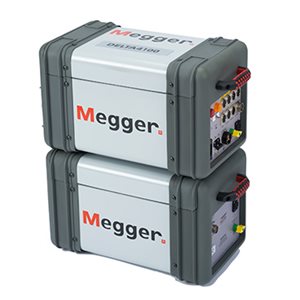
Tan delta test system DELTA4110 in India
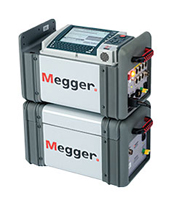
Fully automatic capacitance and tan delta -Delta4310

Power Factor Test Set Megger DELTA4310
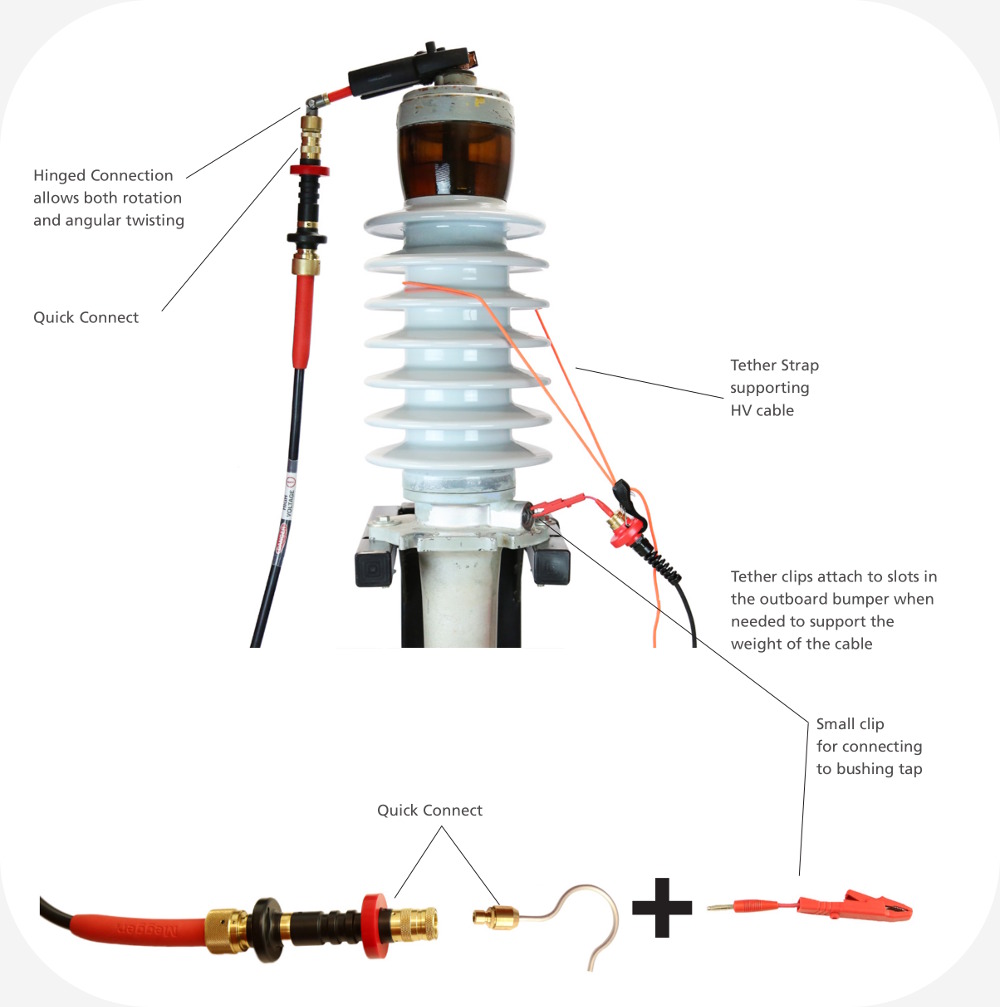
HV Cable connection for Capacitance and Tan delta
Tan delta applications: Power transformers , Distribution transformers, Instrument transformers, Rotating machines, Oil insulationn Bushings, Cables, Capacitors, Circuit breakers, Surge arresters
Capacitance and Tan delta test capabilities : Power factor, Dissipation factor (tan∂), Excitation current, Power factor tip-up, Watts loss, Inductance, Capacitance, Voltage, Current ,Turns ratio.,
Adiradh Energy supply Tan delta kits,Tan Delta Tester ,Capacitance and tan delta systems ,12KV Insulation Diagnostic system ,Tan Delta Testing Equipmen, Delta4110,Delta4000 series ,Delta4310A,in India;Hyderabad; Visakhapatnam; Vijayawada; Chennai; Puducherry; Trichy; Coimbatore; Hosur; Bangalore; Hubli; Mysore; Cochin; Kolkata; Pune; Goa; Mumbai; Thane; Kanpur; Jaipur; Nagpur; Delhi; Noida; Gurugam; Bhopal; Vadodara;Ahmedabad;Chandigarh;Chandigarh;Tata Nagar; Raipur; Rudrapur;; Durgapur; Kharagpur;Raigarh;Bhilai;Angul; Haldia;Jabalpur;Indore;Jamshedpur; Rajahmundry; Bokaro Steel City;salem;kochi; Rourkela; Ahmedabad ;Jamnagar; Bharuch; Sri City ; Nashik;Haridwar;Mathura;Aurangabad ; Bhubaneswa,Gurgaon and other cities
1-500Hz Narrow Band Dielectric Frequency Response for Tan delta
1Hz Power factor-dissipation application note for Tan delta
Dielectric Assessment for field commissioning using Tan delta
DELTA4110 Insulation Diagnostic System scope of supply
Detailed description of the Megger Delta4000’s general hardware and optional accessories.
DELTA4000 transformer test set helps to ensure that insulation power factor tests are completed safely and efficiently
Capacitance and Tan delta 4000 series Comply with Standards
Safety
IEC / ANSI 61010-1:2001
Shock and vibration
IEC 68-2-31, first edition, drop and topple (push over)
IEC 68-2-31, second edition, free fall
ISTA 2A
EMC
FCC 47 CFR Part 15 Class A Emissions requirements (USA)
(FCC Subpart B of Part 15 Class A)
EN 55011:1998/A1:1999/A2:2002 Group 1 Class A ISM Emissions
requirements (EUROPE)
AS/NZS CISPR 11:2004 Class A ISM Emissions requirements
(Australia)
EN 61326:1997/A1:1998/A2:2001/A3:2003
IEC/EN 61000-4-2/3/4/5/6/8/11
IEC/EN 61000-6-2
Test Equipment Specifications Met: IEC/EN 61000-6-4;
IEC 801-2(1984) Electrostatic Discharge; ANSI/IEEE C37.90.1 Surge Withstand Capability
FAQ / Frequently Asked Questions for Capacitance and tan delta
What are the advantages of a narrowband DFR test?
Absolutely. In fact, when PF/TD testing a transformer, the HV and LV windings are short-circuited. Therefore, the insulation between each winding turn is not stressed/not assessed. Excitation current tests are performed without short-circuiting the windings and, therefore, assess the condition of the winding(s) turns insulation. Beyond assessing this turn-to-turn insulation for full or partial breakdown, an excitation current test can detect winding to ground short-circuited conditions and tracking problems in the insulation, such as from one phase winding to an adjacent phase winding. Beyond insulation testing capabilities, an exciting current test is often recognised for its ability to detect problems with a transformer’s core and the test’s diagnostic reach with regards to tap changers, both de-energised (DETC) and on-load (OLTC) is impressive.
Is a tip-up test replaced by the Voltage Dependence Detection feature in the DELTA?
Not exactly. The DELTA4000 measures the harmonic content of the signal in every test and, based on this information, calculates a Voltage Dependence Factor (VDF). If this value is too high (default > 0.5), the number turns red, indicating a voltage dependence of the test object. In this situation, a tip-up (step voltage) test should be performed to verify and quantify the voltage dependence. This feature gives reassurance that a voltage-sensitive dielectric problem doesn’t go missed, particularly in an asset that doesn’t have a proclivity for developing voltage-sensitive dielectric problems and, therefore, is not routinely subjected to tip-up tests.
Why is Individual Temperature Correction (ITC) important?
A NB DFR test allows for the determination of an insulation system’s unique, or individual temperature correction (ITC). This is significant as testing has revealed that not only does every transformer exhibit unique sensitivity to temperature and require individual temperature compensation, but, over its life, the temperature dependency of a transformer can change. Generally, as insulation deteriorates, an increase in temperature causes power factor/tan delta (PF/TD) to increase dramatically. Also of interest is that a transformer’s individual insulation components (CH, CHL, and CL) may each exhibit differing temperature dependencies.The ITC method is based on the fact that the shape of the dielectric response (PF/TD versus frequency) for a large group of solid dielectric materials does not change drastically with temperature . Further, as temperature changes, the response shifts with respect to frequency while remaining intact. A PF/DF value measured at 60 Hz and 20 °C will occur at a different frequency if the temperature changes. Therefore, if testing at a non-20 °C insulation temperature, one can locate the 20 °C equivalent 60 Hz power factor somewhere along the measured response if the frequency at which it occurs at that temperature is known. This frequency is determined through the application of the Arrhenius equation.
What is the problem with using temperature correction curves or temperature correction tables?
For years, the industry has relied upon a couple of curves to correct for the temperature dependency of all transformers: whether new, service-aged, lightly loaded, over-loaded, clean, or contaminated, etc. But, while generic correction factors were available in IEEE standard C57.12.90-2006, section 10.10.5, they were subsequently removed in C57.12.90-2010 with the following note: “Note 3.b) Experience has shown that the variation in power factor with temperature is substantial and erratic so that no single correction curve will fit all cases.” The bottom line is that new insulation and aged insulation have different sensitivities to temperature, as do contaminated insulation systems versus dry and ‘clean’ insulation systems. Temperature correction curves and temperature correction tables do not account for these differences.
Resonating inductor is an accessory for use with the semi-automatic 12 kV extended-range capacitance and dissipation factor equipment , or the automated insulation power factor unit (DELTA series) Capable of tuning capacitances up to 1µF at 10 kV.

Adiradh Energy offers resonating inductor in India;Hyderabad; Visakhapatnam; Vijayawada; Chennai; Puducherry; Trichy; Coimbatore; Hosur; Bangalore; Hubli; Mysore; Cochin; Kolkata; Pune; Goa; Mumbai; Thane; Kanpur; Jaipur; Nagpur; Delhi; Noida; Gurugam; Bhopal; Vadodara;Ahmedabad; Chandigarh;Chandigarh;Tata Nagar; Raipur; Rudrapur;; Durgapur; Kharagpur;Raigarh;Bhilai;Angul; Haldia;Jabalpur;Indore;Jamshedpur; Rajahmundry; Bokaro Steel City;salem;kochi; Rourkela; Ahmedabad ;Jamnagar; Bharuch; Sri City ; Nashik;Haridwar;Mathura;Aurangabad ; Bhubaneswar,Gurgaon and other cities
Brochure for Resonating Inductor
CDAX 605 is a capacitance and dissipation factor measurement set to be used with an external power source/generator. It is a precision instrument using a combination of bridge and direct (vector) measurements and is capable of measuring capacitive, resistive and inductive loads.

HIGH-PRECISION C AND DF MEASUREMENT INSTRUMENT
Adiradh Energy offers high precision C and DF measurement equipment ,CDAX 605 in India;Hyderabad; Visakhapatnam; Vijayawada; Chennai; Puducherry; Trichy; Coimbatore; Hosur; Bangalore; Hubli; Mysore; Cochin; Kolkata; Pune; Goa; Mumbai; Thane; Kanpur; Jaipur; Nagpur; Delhi; Noida; Gurugam; Bhopal; Vadodara; Ahmedabad;Chandigarh;Chandigarh;Tata Nagar; Raipur; Rudrapur;; Durgapur; Kharagpur;Raigarh;Bhilai;Angul; Haldia;Jabalpur;Indore;Jamshedpur; Rajahmundry; Bokaro Steel City;salem;kochi; Rourkela; Ahmedabad ;Jamnagar; Bharuch; Sri City ; Nashik;Haridwar;Mathura;Aurangabad;Bhubaneswar,Gurgaon and other cities
Brochure for High-precision C and DF measurement instrument CDAX605

Adiradh Energy Pvt.Ltd
Lakshmi Nilayam, #15-29-887/C2,
Rd Number 2, Kukatpally Housing Board Colony,
Hyderabad, Telangana 500072

Mobile : 9440761200
Land line : 04023051200

info@adiradh.com

2025 - Industry. All Rights Reserved.